Federal Budget 2026-2027: $6 Trillion Proposed Spending Unpacked

The proposed federal budget 2026-2027 allocates $6 trillion towards critical sectors like healthcare, defense, infrastructure, and social programs, directly impacting the nation’s economic trajectory and public services.
The unveiling of the federal budget 2026-2027, proposing an ambitious $6 trillion in spending, marks a pivotal moment for the United States. This substantial financial blueprint outlines not only the government’s priorities but also sets the stage for economic shifts and societal impacts across the nation. Understanding where these vast sums are earmarked is crucial for every American citizen, as it directly influences everything from job markets to healthcare access and infrastructure development.
Understanding the $6 Trillion Federal Budget 2026-2027
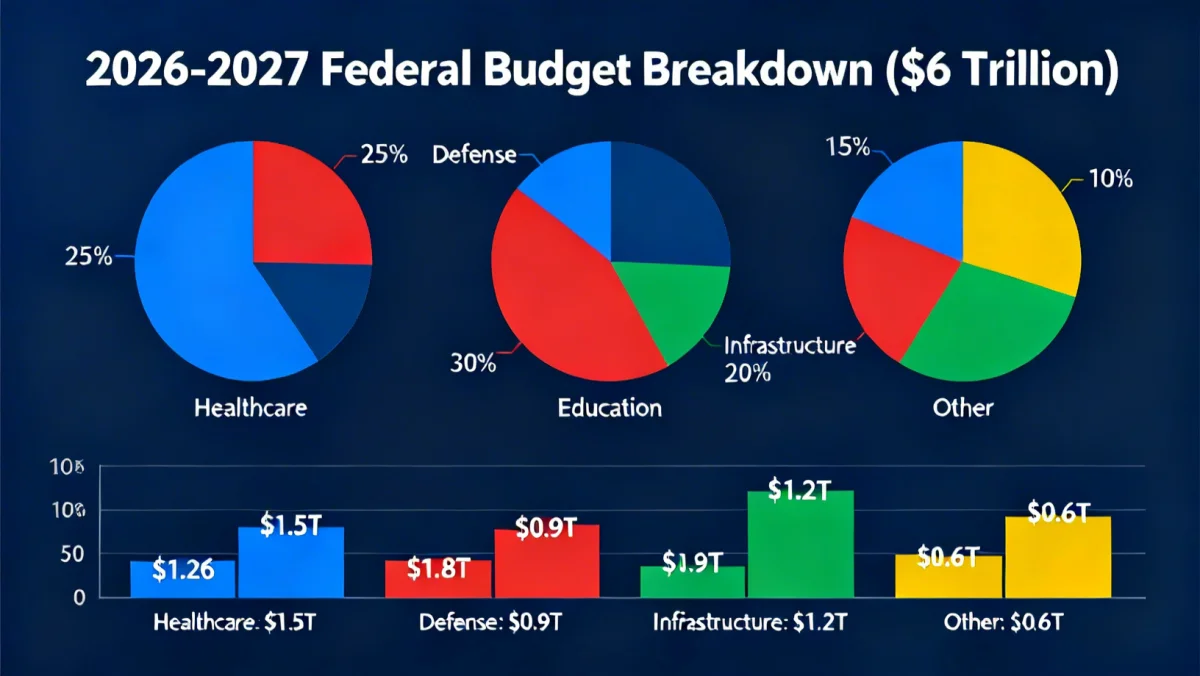
The proposed $6 trillion federal budget for 2026-2027 is more than just a collection of numbers; it is a strategic document reflecting the nation’s priorities and challenges. This comprehensive plan details how the government intends to allocate resources to address pressing issues, foster economic growth, and ensure national security. Delving into its specifics provides insight into the future direction of federal policy and its potential ripple effects.
This budget represents a significant commitment to various sectors, aiming to balance immediate needs with long-term investments. The sheer scale of the spending underscores the complexity of governing a nation as diverse and dynamic as the United States, requiring careful consideration of competing interests and evolving global landscapes.
Key components of the budget proposal
- Economic Stimulus: Measures designed to boost economic activity and job creation.
- Social Safety Nets: Funding for programs supporting vulnerable populations.
- Technological Advancement: Investments in research and development for future growth.
The document itself is a product of extensive deliberation, incorporating input from various federal agencies, economic experts, and congressional committees. Its acceptance and implementation will undoubtedly shape the American experience for years to come, making a thorough understanding of its provisions essential for informed civic engagement.
Healthcare: A Major Beneficiary of Federal Funding
Healthcare continues to be one of the largest and most critical components of the federal budget. For 2026-2027, significant allocations are proposed to bolster existing programs, expand access to care, and invest in medical research. This commitment reflects an ongoing effort to improve public health outcomes and address the rising costs of medical services for millions of Americans.
The focus extends beyond just treating illnesses; it encompasses preventative care, mental health services, and support for aging populations. These initiatives are designed to create a more resilient and equitable healthcare system capable of meeting future demands.
Expanding access and affordability
A key area of expenditure within healthcare is aimed at making services more accessible and affordable. This includes potential expansions of Medicaid and Medicare, as well as subsidies for health insurance premiums under the Affordable Care Act. The goal is to reduce the burden of healthcare costs on individuals and families, ensuring that essential medical care is within reach for everyone.
Furthermore, there is a strong emphasis on addressing disparities in healthcare access, particularly in underserved rural and urban communities. Funding will likely be directed towards increasing the number of healthcare professionals in these areas and improving the infrastructure of local clinics and hospitals.
- Medicaid Expansion: Enhancing coverage for low-income individuals.
- Medicare Modernization: Improving benefits and reducing out-of-pocket costs for seniors.
- Mental Health Services: Increased funding for prevention and treatment programs.
Investments in medical research and public health infrastructure are also pivotal. The budget proposes substantial funds for agencies like the National Institutes of Health (NIH) and the Centers for Disease Control and Prevention (CDC) to combat diseases, develop new treatments, and prepare for future health crises. This forward-looking approach is vital for safeguarding national health.
Infrastructure Development: Roads, Bridges, and Beyond
A substantial portion of the federal budget 2026-2027 is dedicated to revitalizing the nation’s infrastructure. This includes not only traditional projects like roads, bridges, and public transit but also modern necessities such as broadband internet expansion and renewable energy infrastructure. The aim is to create a more efficient, sustainable, and connected United States, boosting economic competitiveness and improving daily life.
Decades of underinvestment have left much of the country’s infrastructure in need of significant upgrades. This proposed budget seeks to rectify that, laying the groundwork for future prosperity and resilience against environmental challenges.
Modernizing America’s foundational systems
The emphasis on infrastructure development is multi-faceted. It involves repairing existing structures, building new ones, and investing in technologies that will make these systems smarter and more efficient. High-speed rail, electric vehicle charging stations, and upgraded power grids are all on the agenda, reflecting a vision for a greener, more advanced nation.
Beyond the physical structures, there’s a focus on the economic benefits. Infrastructure projects are significant job creators, stimulating local economies and providing opportunities for skilled labor. This aspect of the budget is seen as a direct investment in the American workforce.
- Road and Bridge Repair: Critical upgrades to transportation networks.
- Public Transit Modernization: Investments in cleaner and more efficient urban transport.
- Broadband Expansion: Bringing high-speed internet to underserved areas.
The budget also acknowledges the growing threat of climate change, proposing funds for resilient infrastructure that can withstand extreme weather events. This includes investments in coastal protection, wildfire prevention, and grid hardening, ensuring that communities are better prepared for the impacts of a changing climate.
National Defense and Security Allocations
Maintaining a strong national defense and ensuring homeland security remain paramount in the federal budget 2026-2027. Significant funds are allocated to the Department of Defense, intelligence agencies, and cybersecurity initiatives. These investments are crucial for protecting national interests, deterring adversaries, and responding to global threats in an increasingly complex geopolitical landscape.
The budget reflects an ongoing commitment to modernizing military capabilities, supporting service members, and safeguarding critical infrastructure from both conventional and emerging threats.
Strengthening military capabilities and cybersecurity
A core focus within defense spending is on technological superiority. This includes funding for advanced weaponry, artificial intelligence in defense applications, and space-based capabilities. The goal is to ensure that the U.S. military remains at the forefront of global innovation and maintains its deterrent capabilities.
Cybersecurity is another critical area, with substantial investments planned to protect government networks, critical infrastructure, and private sector systems from increasingly sophisticated cyberattacks. This proactive approach is essential in an era where digital threats pose significant risks to national security and economic stability.
- Military Modernization: Upgrading equipment and technology for all branches.
- Cybersecurity Defenses: Protecting against digital threats and espionage.
- Personnel Support: Ensuring adequate resources for service members and their families.
Furthermore, the budget allocates resources for international alliances and partnerships, recognizing that global security often requires collaborative efforts. Diplomatic initiatives, foreign aid, and joint military exercises are all part of a comprehensive strategy to promote stability and address shared challenges worldwide.
Education and Workforce Development Initiatives
Investing in education and workforce development is a cornerstone of the federal budget 2026-2027, recognizing that a skilled populace is vital for economic prosperity and social mobility. Proposed spending aims to enhance educational opportunities from early childhood through higher education, as well as to support retraining and upskilling programs for adults.
These initiatives seek to address skill gaps, promote innovation, and ensure that all Americans have the chance to achieve their full potential in a rapidly evolving job market.
Fostering lifelong learning and skill acquisition
The budget proposes significant increases in funding for K-12 education, particularly for schools in underserved communities. This includes programs aimed at reducing class sizes, improving teacher salaries, and investing in modern learning technologies. The goal is to provide every child with a strong educational foundation, regardless of their socioeconomic background.
Higher education also receives considerable attention, with proposals to expand Pell Grants, reduce student loan burdens, and increase funding for community colleges. These measures are designed to make post-secondary education more accessible and affordable, preparing students for high-demand careers.
- Early Childhood Education: Expanding access to quality pre-kindergarten programs.
- STEM Education: Promoting science, technology, engineering, and math fields.
- Job Training Programs: Reskilling initiatives for dislocated workers and emerging industries.
Workforce development programs are a key focus, with funds allocated to apprenticeships, vocational training, and career counseling services. These programs are essential for ensuring that the American workforce has the skills needed to compete in the global economy and adapt to technological advancements.
Social Programs and Environmental Protection
Beyond the major spending areas, the federal budget 2026-2027 also dedicates substantial resources to a range of social programs and environmental protection initiatives. These allocations reflect a commitment to supporting vulnerable populations, promoting social equity, and addressing the ongoing challenge of climate change.
From housing assistance to food security and conservation efforts, these programs play a vital role in enhancing the quality of life for millions of Americans and safeguarding the nation’s natural resources for future generations.
Supporting communities and a sustainable future
Social programs encompass a broad spectrum of services designed to provide a safety net for those in need. This includes funding for affordable housing initiatives, food assistance programs like SNAP, and support for individuals with disabilities. The goal is to reduce poverty, promote stability, and ensure that basic needs are met across all communities.
Environmental protection is another critical area, with significant investments proposed for renewable energy research, conservation efforts, and climate change mitigation. This includes funding for agencies like the Environmental Protection Agency (EPA) to enforce regulations, clean up pollution, and protect natural habitats.
- Affordable Housing: Increasing access to safe and stable housing options.
- Food Security: Strengthening programs to combat hunger and food insecurity.
- Climate Change Initiatives: Investing in renewable energy and emission reduction.
The budget also includes provisions for disaster relief and preparedness, acknowledging the increasing frequency and intensity of natural disasters. These funds are crucial for helping communities recover and build resilience against future events, demonstrating a holistic approach to national well-being.
Economic Impact and Fiscal Outlook of the 2026-2027 Budget
The proposed $6 trillion federal budget 2026-2027 will undoubtedly have profound economic implications, influencing everything from inflation and interest rates to employment and national debt. Analyzing its potential impact requires a careful look at both the immediate effects of increased spending and the long-term fiscal outlook for the United States.
This budget aims to stimulate growth and address societal needs, but it also raises questions about its financing and sustainability, prompting debates among economists and policymakers.
Analyzing the long-term financial implications
Increased federal spending, particularly on infrastructure and social programs, is expected to boost economic activity and create jobs in the short term. However, the budget’s reliance on borrowing to finance these expenditures could lead to a further increase in the national debt, potentially impacting future generations.
The budget also includes proposals for revenue generation, such as changes to tax policies for corporations and high-income earners. These measures are intended to offset some of the spending, but their effectiveness and political feasibility remain subjects of intense discussion.
- Inflationary Pressures: Potential impact of increased demand on prices.
- National Debt: The trajectory of federal borrowing and its sustainability.
- Tax Policy Changes: Proposed adjustments to revenue generation.
The fiscal outlook is further complicated by demographic shifts, such as an aging population, which will continue to place pressure on entitlement programs like Social Security and Medicare. The 2026-2027 budget attempts to navigate these challenges, but long-term structural reforms may still be necessary to ensure fiscal stability.
| Key Spending Area | Brief Description |
|---|---|
| Healthcare | Significant funds for expanding access, improving affordability, and investing in medical research and public health infrastructure. |
| Infrastructure | Modernization of roads, bridges, public transit, broadband internet, and renewable energy systems to boost connectivity and sustainability. |
| National Defense | Investments in military modernization, cybersecurity, and support for service members to ensure national security and global stability. |
| Education & Workforce | Enhancing educational opportunities from early childhood to higher education and supporting adult retraining programs. |
Frequently Asked Questions About the 2026-2027 Federal Budget
The proposed spending for the federal budget 2026-2027 is an ambitious $6 trillion. This extensive financial plan outlines the government’s intended allocations across various critical sectors and programs, reflecting national priorities and economic strategies for the upcoming fiscal year.
Major beneficiaries in the federal budget 2026-2027 include healthcare, infrastructure development, national defense, education, and social programs. These sectors are slated for substantial investment to address long-standing challenges and foster future growth and stability across the United States.
The federal budget 2026-2027 is expected to impact everyday Americans through improved healthcare access, modernized infrastructure (like better roads and broadband), enhanced educational opportunities, and stronger social safety nets. Economic effects, such as job creation and potential inflationary pressures, are also anticipated.
Primary economic concerns regarding the federal budget 2026-2027 revolve around the potential for increased national debt due to borrowing, and the possibility of inflationary pressures from large-scale government spending. Debates also focus on the effectiveness of proposed revenue generation measures.
Yes, the federal budget 2026-2027 includes significant allocations for environmental protection and climate change initiatives. These funds support renewable energy research, conservation efforts, and resilient infrastructure projects, aiming to mitigate climate impacts and promote a sustainable future for the nation.
Conclusion
The federal budget 2026-2027, with its proposed $6 trillion in spending, represents a monumental effort to steer the United States towards a future of enhanced prosperity, security, and well-being. By allocating substantial resources to critical areas such as healthcare, infrastructure, national defense, education, and social programs, the budget aims to address immediate needs while investing in long-term growth. While the economic implications, particularly regarding national debt and potential inflation, will require careful monitoring, this comprehensive fiscal plan underscores the government’s commitment to tackling complex challenges and fostering a more resilient and equitable nation for all its citizens.
